01CONTEXT
Autonomous Systems
2026 · GRADUATION PROJECT
PROJECT / 01
GPS-DENIED SYSTEM · AUTONOMOUS SYSTEMS
Autonomous exploration and gas-concentration mapping for GPS-denied indoor environments.
3 validation scenarios · autonomous return-home
Autonomous Systems
2026 · GRADUATION PROJECT
Simulation-focused graduation project
Case study / 2026
Indoor environments can make GPS unavailable or unreliable. The project explores a software workflow in which an autonomous drone follows an indoor mission, samples gas concentration across the environment, records spatial measurements, and completes the mission with a return-home phase.
The implementation combines ROS 2 Humble, PX4 SITL, Gazebo Classic and MAVSDK. A simulated gas field exposes concentration measurements to the software stack, while mission logic coordinates the flight sequence and records gas samples for later analysis and visualization.
The project was developed as a set of focused software components for gas-field simulation, autonomous mission execution and result generation. The workflow records measurements during the indoor mission and produces structured outputs such as gas-sample CSV data and heat-map visualizations for analysis.
Validation was performed with no-gas, single-source and multi-source scenarios. Across the evaluated runs, the mission completed the planned room visits and return-home sequence while producing clearly different gas-concentration responses between scenarios.
CASE EVIDENCE
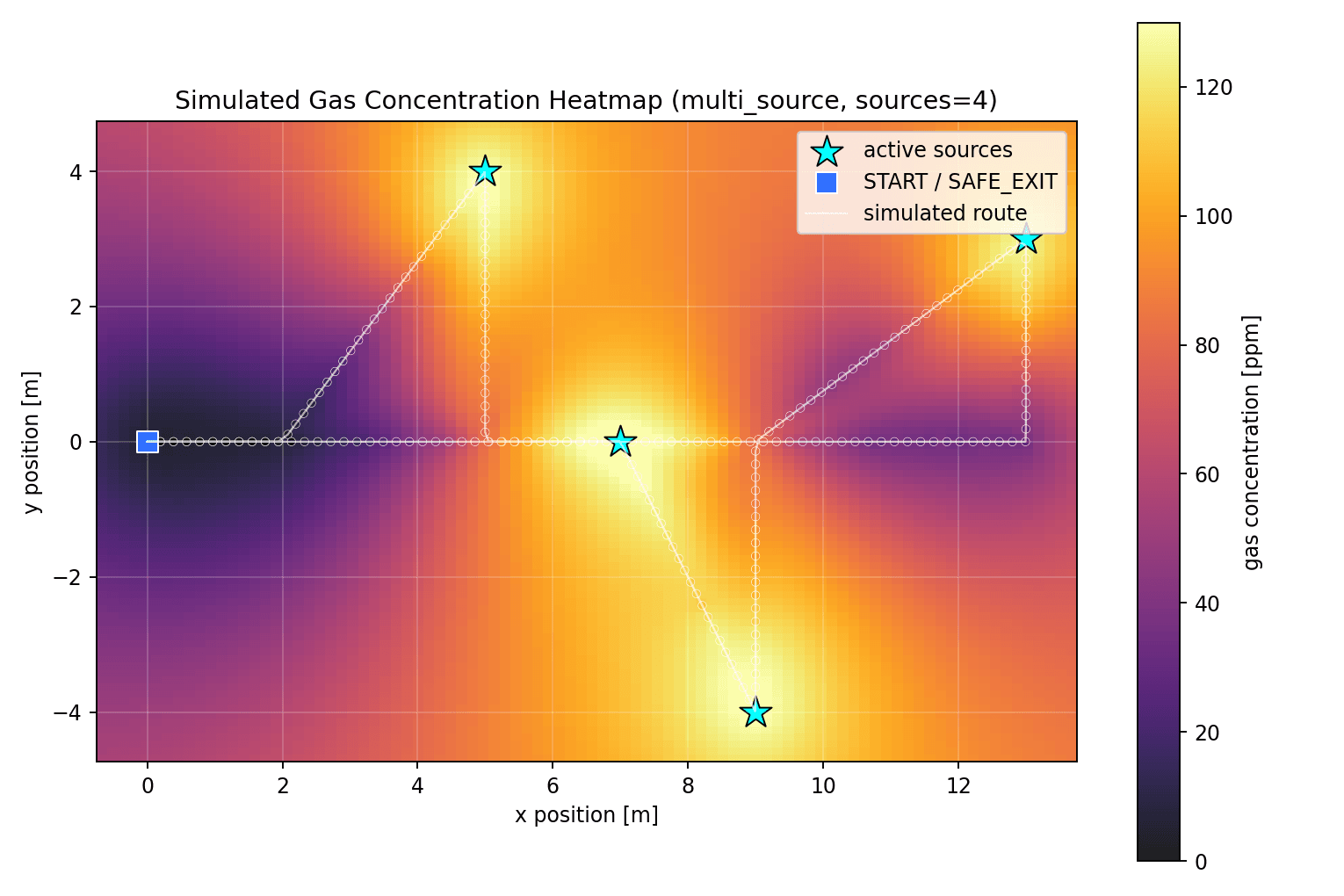
MULTI-SOURCE
Four simulated gas sources create distinct concentration regions while the planned route crosses the indoor sampling area.
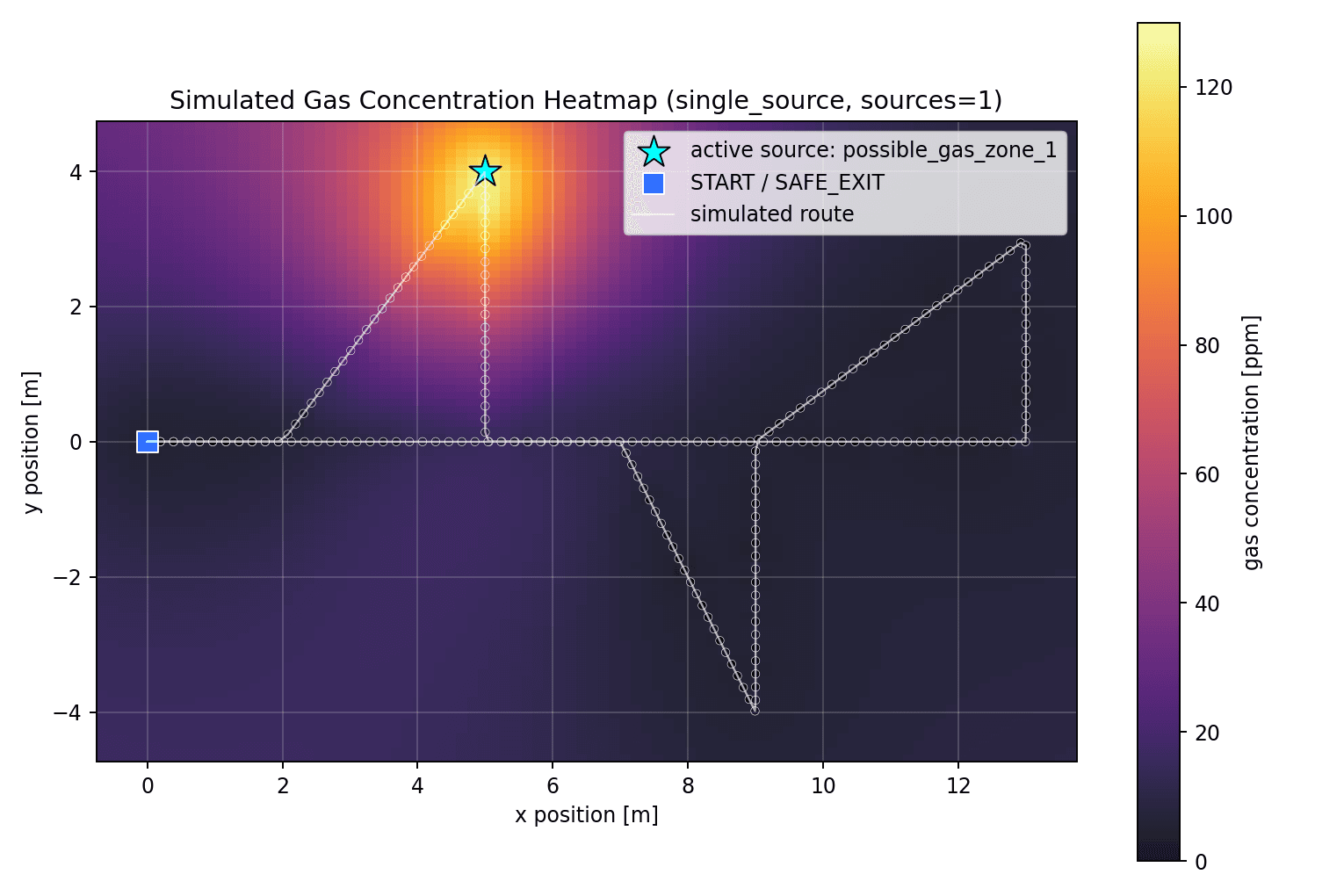
SINGLE-SOURCE
A single active source produces a localized concentration region that is captured along the simulated sampling route.
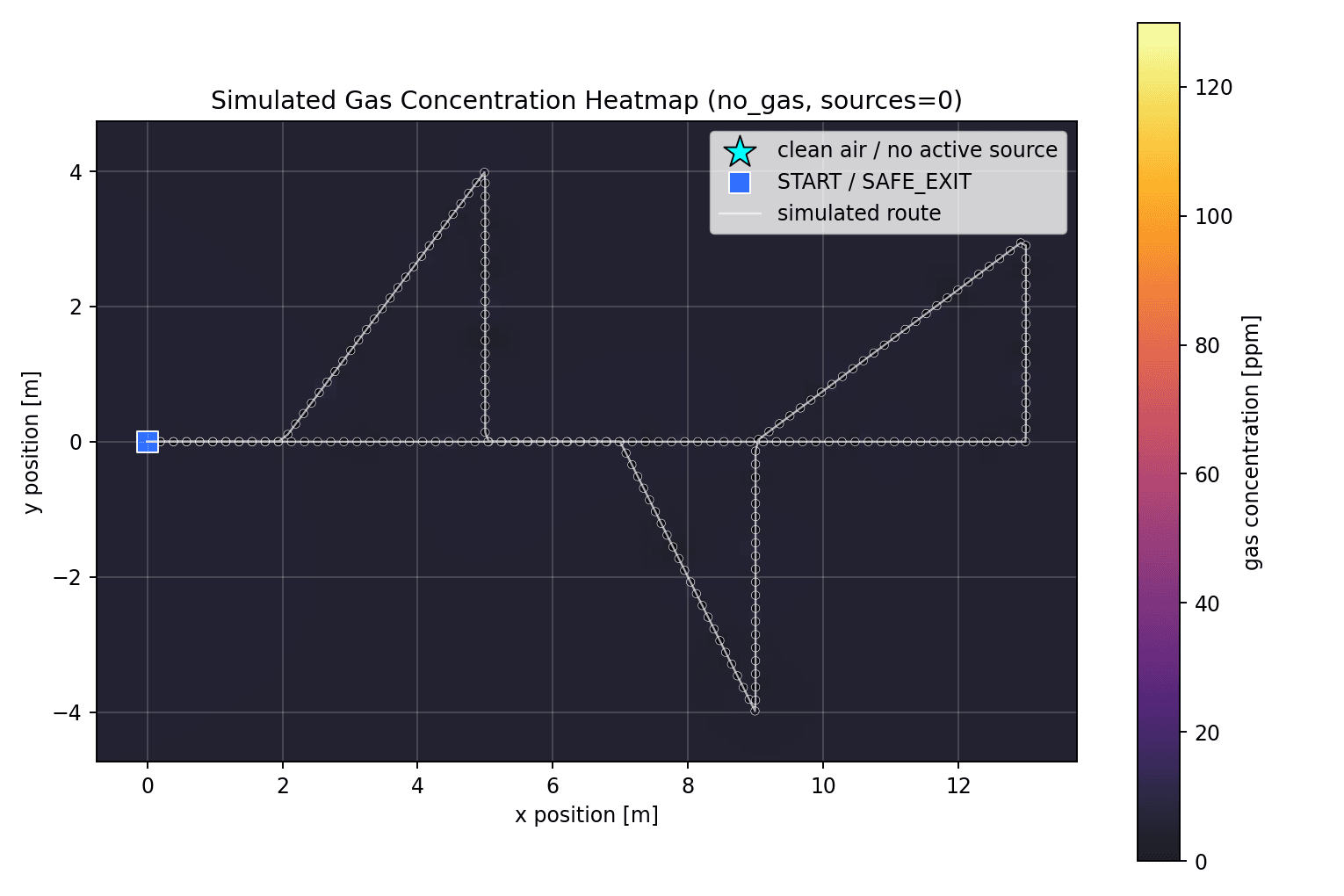
BASELINE
The no-gas scenario provides the baseline response used for comparison with the active-source validation runs.
04 / SCENARIO REVIEW
Max Δ 0.136 ppm
Used as the baseline scenario to verify that the simulated environment remained close to background concentration without an active gas source.
Max average 8.095 ppm
A single gas source produced a measurable concentration increase during the autonomous mission.
Max Δ 111.947 ppm
Multiple gas sources produced the strongest concentration difference among the evaluated scenarios.